Most Sydney homes run on single-phase power, but plenty of houses, especially newer, larger or upgraded ones, have three-phase. Knowing which you have matters before you buy an EV charger, ducted air conditioning or a commercial appliance. Here are five ways to check, safely, from the outside of your meter box, and what to do if you are still not sure.
Blue Link Electrical Services is a NSW licensed electrical contractor (licence 332956C) based in Marrickville and working across Sydney since 2016. If you'd rather we check for you, send a photo of your meter box to 0421 772 661.
Safety first. Only look. Don't remove meter box covers, fuses or seals. Service fuses and meters belong to the network and are live. Supply-side work, such as the service mains, point of attachment and metering, is level 1 and 2 work arranged through accredited partners, and we coordinate it with Ausgrid.
For the full explanation, read single phase vs three phase power.
In most Sydney meter boxes the service fuses (also called main or supply fuses) sit near the meter. They are usually ceramic or plastic carriers, often with a seal.
Be careful: some homes have an extra fuse or meter element for off-peak hot water or a controlled load, so three fuses do not always mean three phase. Our Lilyfield project, for example, has three fuse holders fitted for a new smart meter. See the Lilyfield switchboard and smart meter project.
On the switchboard, find the main switch (usually labelled "Main Switch").
If your switchboard has several main switches for different parts of the house, treat this as a clue, not proof.
Without opening anything, read the label on the meter. A three-phase meter usually says "3 phase", "3 x 230/400 V" or similar, and may show three readings or three indicator lights. A single-phase meter says "1 phase" or "230 V". But a meter can be rated for three phase while only one phase is connected, so check the fuses and main switch too.
If your supply comes in overhead from the pole, look at the point of attachment on the house. Older separate wires: two wires usually means single phase, four wires (three actives and a neutral) means three phase. Newer aerial bundled cable twists the conductors together, which makes this harder to see. Underground supplies give no clue from outside.
Your electricity retailer can look up your connection, and some bills show the supply type. You can also ask the network, Ausgrid, using your NMI (the meter number on your bill). This is the most reliable non-electrician check.
Take a clear photo of the meter box and switchboard with the outer cover open (don't remove inner covers) and send it to us. We can usually tell from the photo, and confirm on site with a meter test.
Single phase is enough for a typical home, including induction cooking, a split system or two and a 7 kW EV charger. Three phase is worth considering when the planned load is large and sustained. The benefits depend on what you want to run, so we look at that first.
See three phase power installation, three phase power in the Inner West and our three-phase switchboard in Ashfield project. Older terraces and cottages often need a new meter panel and a meter box upgrade as well. For more on who does what, read how supply-side work is handled.
Look at the service fuses in the meter box (one fuse usually means single phase, three means three phase), the main switch (one lever or three linked together), and the meter label. Your retailer or an electrician can confirm.
Most Sydney homes are single phase. Three phase is more common in newer or larger homes, homes that have been upgraded, and commercial buildings.
Single phase. Australian single-phase power is nominally 230 V (often still called 240 V). Three phase is 400 V between phases, with 230 V from each phase to neutral.
No. A 15 A power point is single phase. It has a larger earth pin than a 10 A power point. Three-phase outlets are round, usually with four or five pins.
Not necessarily. A meter can be rated for three phase while only one phase is connected. Check the service fuses and the main switch, or ask your retailer.
Possibly not. Some homes have a separate fuse or meter element for off-peak hot water. Multiple meters or fuses do not always mean multiple phases. An electrician can confirm.
Two phases from the street. It is uncommon in Sydney but exists in some areas. The same checks apply: two service fuses and a two-pole main switch.
Often, if three phase is available in the street. Supply-side work, such as the service mains, point of attachment and metering, is level 1 and 2 work arranged through accredited partners, and we coordinate it with Ausgrid.
Blue Link Electrical Services · NSW licence 332956C · since 2016 · fully insured · 24/7 emergency
Blue Link Electrical Services · Marrickville NSW 2204 · 0421 772 661 · bluelinkelectrical.com.au
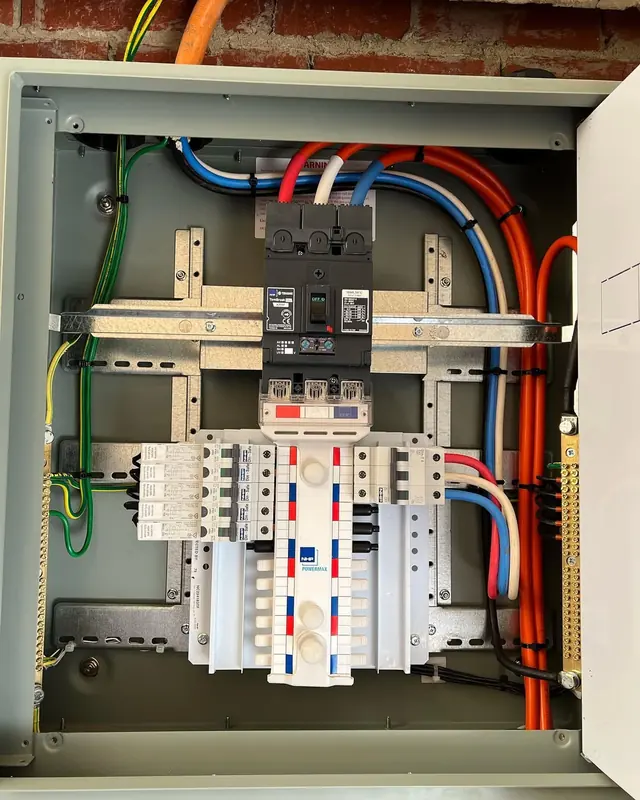 Three Phase Switchboard in Ashfield
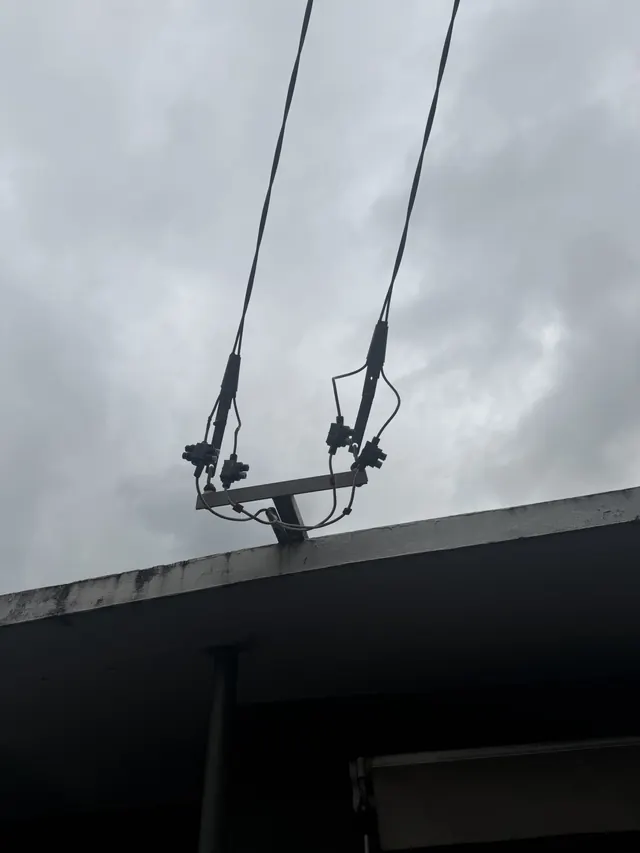 Switchboard Smart Meter Preparation Lilyfield
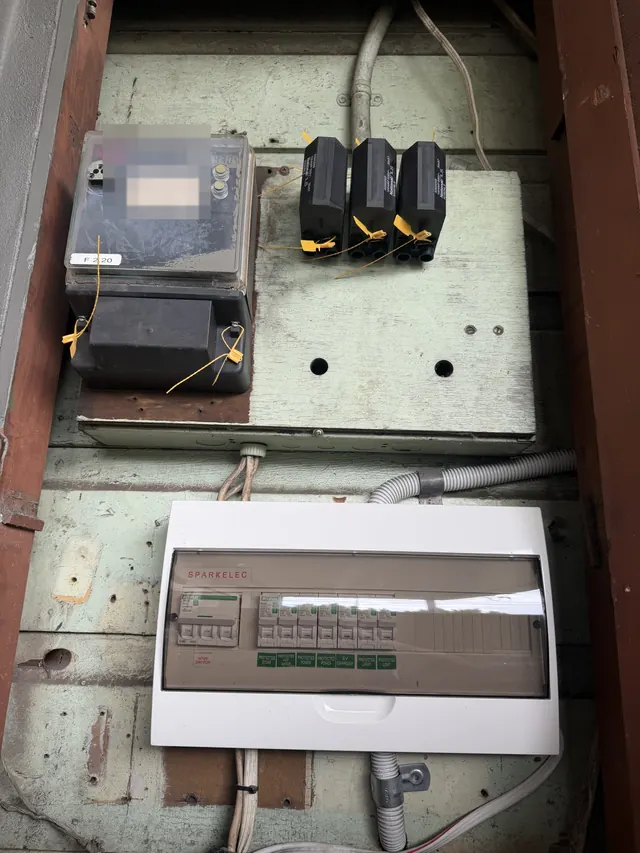 Switchboard Smart Meter Preparation Lilyfield