A safety switch that keeps tripping is doing its job: it has detected current leaking out of a circuit and cut the power before it can hurt someone. The leak is usually a faulty appliance, water in an outdoor fitting or damaged wiring. This guide covers the common causes, the safe checks you can do yourself, and when to call a licensed electrician.
For appliance-specific guides, see our electrical troubleshooting hub. If the power is off and you can't restore it safely, we offer emergency help in Stanmore and across Sydney.
Blue Link Electrical Services is a NSW licensed electrical contractor (licence 332956C), fully insured and in business since 2016, with a lifetime workmanship warranty. We find and fix safety switch faults across Sydney and are open 24/7: 0421 772 661.
Most trips come down to one of these six causes.
Emergency first. Danger, fire, smoke or someone hurt? Call 000. Fallen lines or a street-wide outage? Call Ausgrid on 13 13 88. If you smell burning, see scorch marks or hear crackling at the switchboard, keep clear and call an electrician.
Never keep resetting a switch that trips again and again, and never bypass, remove or tape down a safety switch. Switchboard work in NSW must be done by a licensed electrician. If it won't reset at all, see safety switch won't reset.
Call a licensed electrician if:
Blue Link Electrical Services is available 24/7 across Sydney. Call 0421 772 661 or see emergency electrician Inner West.
A safety switch, or RCD (residual current device), compares the current going out on the active wire with the current coming back on the neutral. If they don't match, some current is leaking, possibly through a person to earth, and the RCD cuts the power almost instantly. Household safety switches typically trip at 30 mA of leakage. Under the wiring rules (AS/NZS 3000), new and altered circuits need safety switch protection. See safety switch rules in NSW.
A circuit breaker is different: it protects the wiring from overload and short circuits, not people from shock. An RCBO combines a circuit breaker and a safety switch for one circuit. Read RCD vs RCBO.
Random or overnight trips are usually caused by something that switches itself on: a fridge or freezer defrost cycle, a heat pump hot water system, a timer-controlled pool pump, outdoor sensor lights, or dew and moisture getting into outdoor fittings overnight. See breaker trips at night. Intermittent faults like these are where professional fault finding helps.
We start at the switchboard, check the whole electrical system, and work out, circuit by circuit, where the leakage is. That means insulation resistance testing of the fixed wiring, testing hard-wired appliances, checking outdoor power points and lights for water, and checking the safety switch itself with a trip-time test. Then we repair the fault: replacing a damaged power point or light, weatherproofing an outdoor fitting, replacing a section of cable or a faulty safety switch. See electrical fault finding.
Press the test button about every three months, as most manufacturers recommend. It should trip straight away; reset it afterwards. If it doesn't trip, the safety switch needs checking and probably replacing. Landlords: see landlord electrician Inner West.
If one or two safety switches cover the whole house, one faulty appliance can take out half the home, and normal leakage from many appliances can build up to nuisance tripping. Older boards may have ceramic fuses and no safety switch at all on some circuits. The fix is usually more RCDs or individual RCBOs, so a fault only switches off its own circuit. That is a switchboard upgrade, our main specialty. See safety switch installation and our RCBO switchboard in Newtown.
New loads such as EV chargers, heat pumps and induction cooktops can also need the right type of RCD protection. We check this when we install them.
Because it is detecting current leaking out of a circuit. The most common causes are a faulty appliance, water in an outdoor power point or light, and damaged wiring. Less often the safety switch itself is worn out.
If it trips straight away with every appliance unplugged, the fault is in the fixed wiring, a hard-wired appliance such as an oven, cooktop, hot water system, exhaust fan or light, or the safety switch itself. Stop resetting it and call a licensed electrician.
Water is getting into something electrical, usually an outdoor power point, a garden or sensor light, or a junction box. A roof leak into a light fitting can also do it. Keep clear of anything wet and call an electrician.
No. Reset it once after unplugging appliances. Each trip means current is leaking somewhere, so if it keeps tripping, stop resetting it and call a licensed electrician. Never bypass or tape down a safety switch.
A safety switch, or RCD (residual current device), watches the current flowing in and out of a circuit. If some of it leaks to earth, possibly through a person, it cuts the power almost instantly to help prevent electric shock.
Yes. If it will not reset with nothing connected, trips for no clear reason, or does not trip when you press the test button, have a licensed electrician check it and replace it if needed.
Yes. Blue Link Electrical Services is available 24/7 across Sydney. Call 0421 772 661.
Unplug or switch off the appliances on that circuit, then push the safety switch back up to ON (on is normally up). If it holds, plug things back in one at a time to find the culprit. If it trips again with everything unplugged, there's a fault in the wiring and you need a licensed electrician.
We help with tripping safety switches across Sydney, including Marrickville, Newtown, Dulwich Hill, Petersham, Stanmore, Leichhardt, Ashfield and the rest of the Inner West. Local pages: safety switches Marrickville, Dulwich Hill, Petersham, Leichhardt, Ashfield, Croydon and Croydon Park. After hours: emergency electrician Inner West.
Blue Link Electrical Services · NSW licence 332956C · since 2016 · fully insured · 24/7 emergency
Blue Link Electrical Services · Marrickville NSW 2204 · 0421 772 661 · bluelinkelectrical.com.au
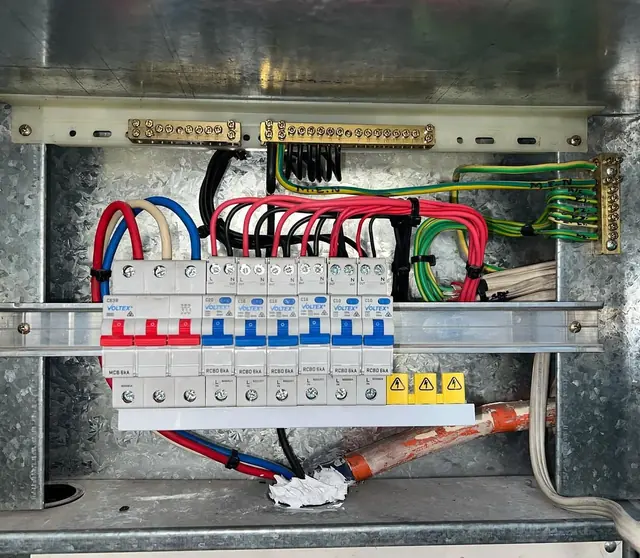 RCBO Switchboard in Newtown
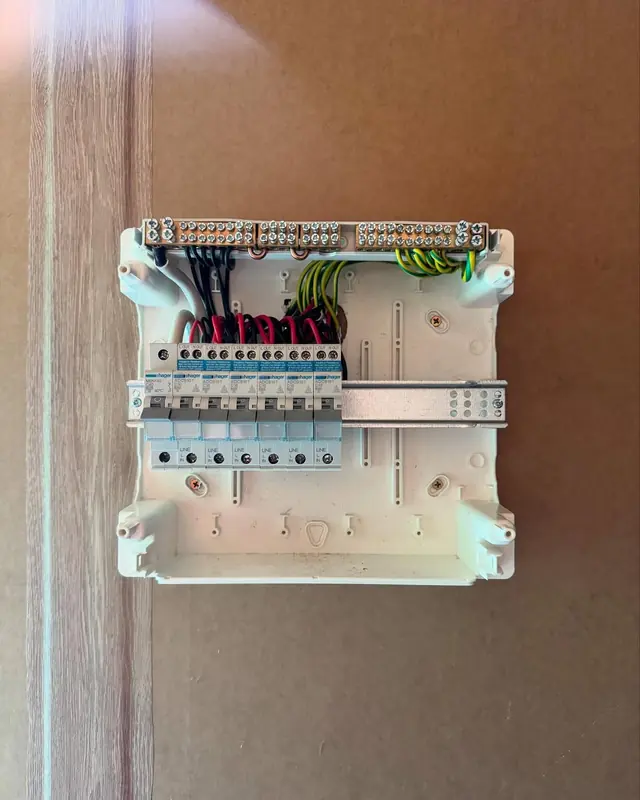 New Switchboard in Rozelle
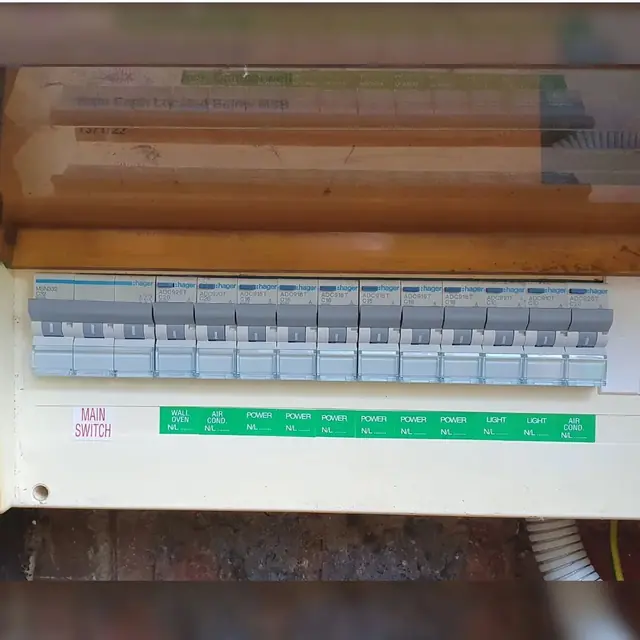 Hager Switchboard Upgrade in Annandale