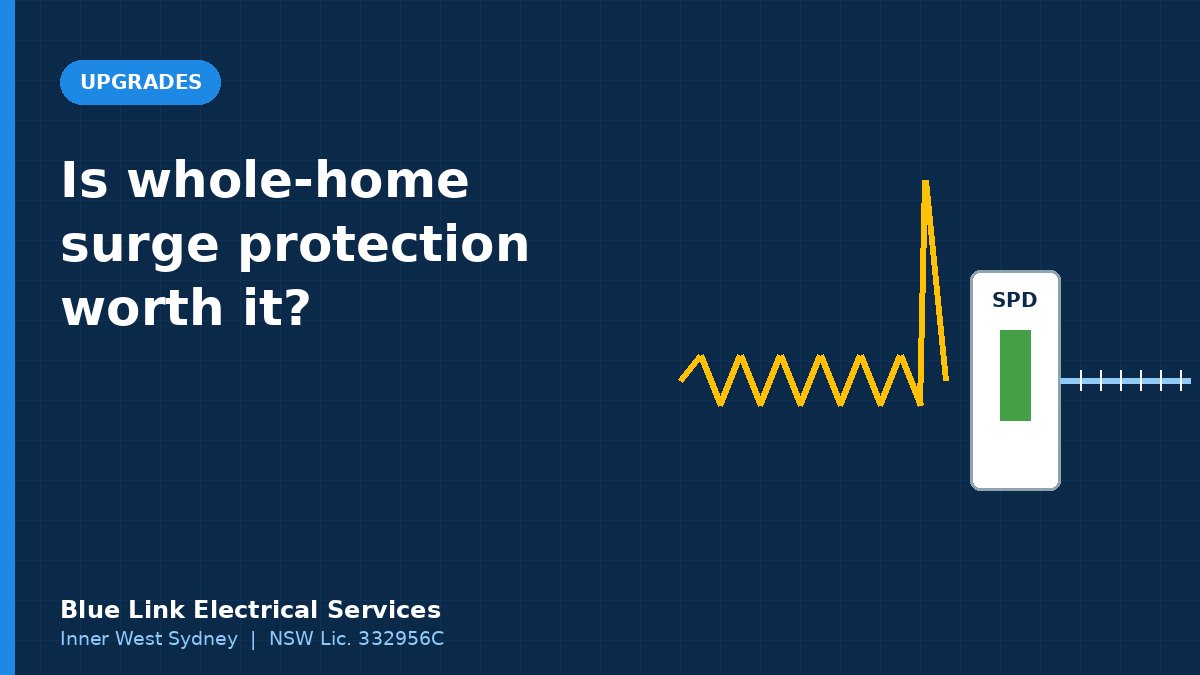
Short answer: Whole-home surge protection is a surge protection device (SPD) fitted at your switchboard that diverts voltage spikes to earth before they reach your wiring and appliances. It’s worth considering if you have expensive electronics, solar, a battery, an EV charger or a home office, especially in areas with overhead power lines. It doesn’t protect against a direct lightning strike, and it works best combined with good surge power boards for sensitive gear.
Most people only think about surge protection after a storm takes out the TV or the modem. A surge protection device at the switchboard is a relatively small addition, especially during a switchboard upgrade, but it isn’t magic. Here’s an honest look at what it does and when it’s worth it.
What causes surges
A surge is a short spike in voltage, lasting fractions of a second. Common causes include:
- lightning striking near power lines, not necessarily your house
- network switching and faults on the grid
- large motors starting and stopping, such as air conditioners and pool pumps
- storm damage to overhead lines, which are common on Inner West streets
Small, repeated surges can also wear out electronics gradually, rather than destroying them in one hit.
How a switchboard SPD works
The SPD is a module fitted in your switchboard, connected between the active conductors and earth. Under normal voltage it does nothing. When voltage spikes above its rating, it conducts the excess energy to earth, limiting how much reaches your circuits. Many have an indicator window showing whether they’re still working.
What it does and doesn’t do
| It does | It doesn’t |
|---|---|
| Reduce surges coming in from the network | Protect against a direct lightning strike to your home |
| Protect every circuit at once, including hardwired appliances | Stop surges entering through phone, NBN or TV antenna cables |
| Help protect inverters, EV chargers, ovens and air conditioners | Replace safety switches or circuit breakers |
| Sit out of sight in the switchboard | Last forever; large surges can use it up |
Whole-home vs surge power boards
The best protection is usually layered:
- Switchboard SPD handles the bigger surges coming in from outside.
- Quality surge power boards at the TV, computer and modem catch smaller surges and residual energy.
A surge power board on its own only protects what’s plugged into it. It does nothing for your hardwired oven, air conditioner, hot water system or solar inverter.
When it’s worth it
Surge protection makes the most sense if you:
- have solar panels, a battery or an EV charger, which contain expensive electronics
- work from home with computers and networking gear
- have high-end appliances with electronic controls, like induction cooktops and smart fridges
- are on overhead power lines, which are more exposed to lightning and storm damage
- are already upgrading your switchboard, when adding an SPD is simpler
It’s less of a priority if you rent, have few electronics, or your switchboard has no space and isn’t due for an upgrade.
Things to ask before installing
- Is there space on the board? An SPD typically needs a spare space or two, plus correct protection.
- Is the earthing in good condition? An SPD relies on a good earth. Older homes may need their earthing checked.
- What’s the rating and indicator? Ask what surge rating the device has and how you’ll know if it needs replacing.
- What about solar? Some solar systems have their own surge protection on the DC side. Your electrician and solar installer can advise.
Want surge protection fitted? We install surge protection on new and existing switchboards across the Inner West. Call 0421 772 661 and we’ll check your board’s space and earthing.
Cost factors
We don’t quote surge protection without seeing the board. The things that affect the cost are:
- whether there’s space on the existing switchboard
- the type and rating of the SPD
- whether earthing needs improving
- whether it’s added on its own or during a switchboard upgrade
If your switchboard is old, it may make more sense to upgrade the board and add surge protection at the same time. See replacing a ceramic fuse switchboard.
Storms and safety
If a storm brings down power lines or you see sparking, stay well clear and call Ausgrid on 13 13 88, as advised on Ausgrid’s emergency page. For anything inside your home, see what to do in an electrical emergency.
We fit surge protection in Rozelle, Balmain, Lilyfield and across the Inner West.
Frequently asked questions
Is whole-house surge protection worth it in Sydney?
It’s worth considering if you have solar, a battery, an EV charger, a home office or expensive appliances, particularly with overhead power lines. It’s especially cost-effective during a switchboard upgrade.
Does surge protection protect against lightning?
It reduces surges from nearby lightning coming through the power lines, but no household device can protect against a direct strike to your home.
Do I still need surge power boards?
For sensitive electronics, yes. A switchboard SPD and quality surge power boards work best together.
How long does a surge protector last?
It depends on how many surges it absorbs. Many have an indicator showing when they need replacing. Check it after major storms.