
The old downlights in this Dulwich Hill home were connected through an extension board, with a plug for each downlight. We re-ran new cables for the downlights, fixed the wiring to standards and made it safe.
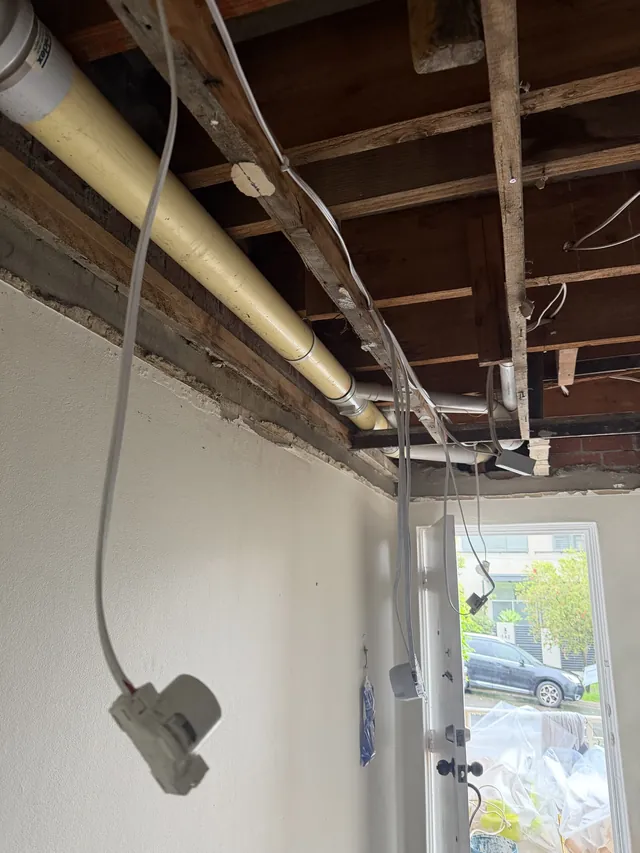
The existing downlights weren't wired as a fixed lighting circuit. Instead, the old installation relied on an extension board, with a plug for each downlight. That is an improvised setup, not a proper way to wire lights, and it isn't something to leave in a ceiling.
We re-ran new cables for the downlights and took the old plug-in arrangement out of the circuit. The new cables were run through the ceiling space with the ceiling open and fixed in place along the joists, so the downlights are now wired to standards.
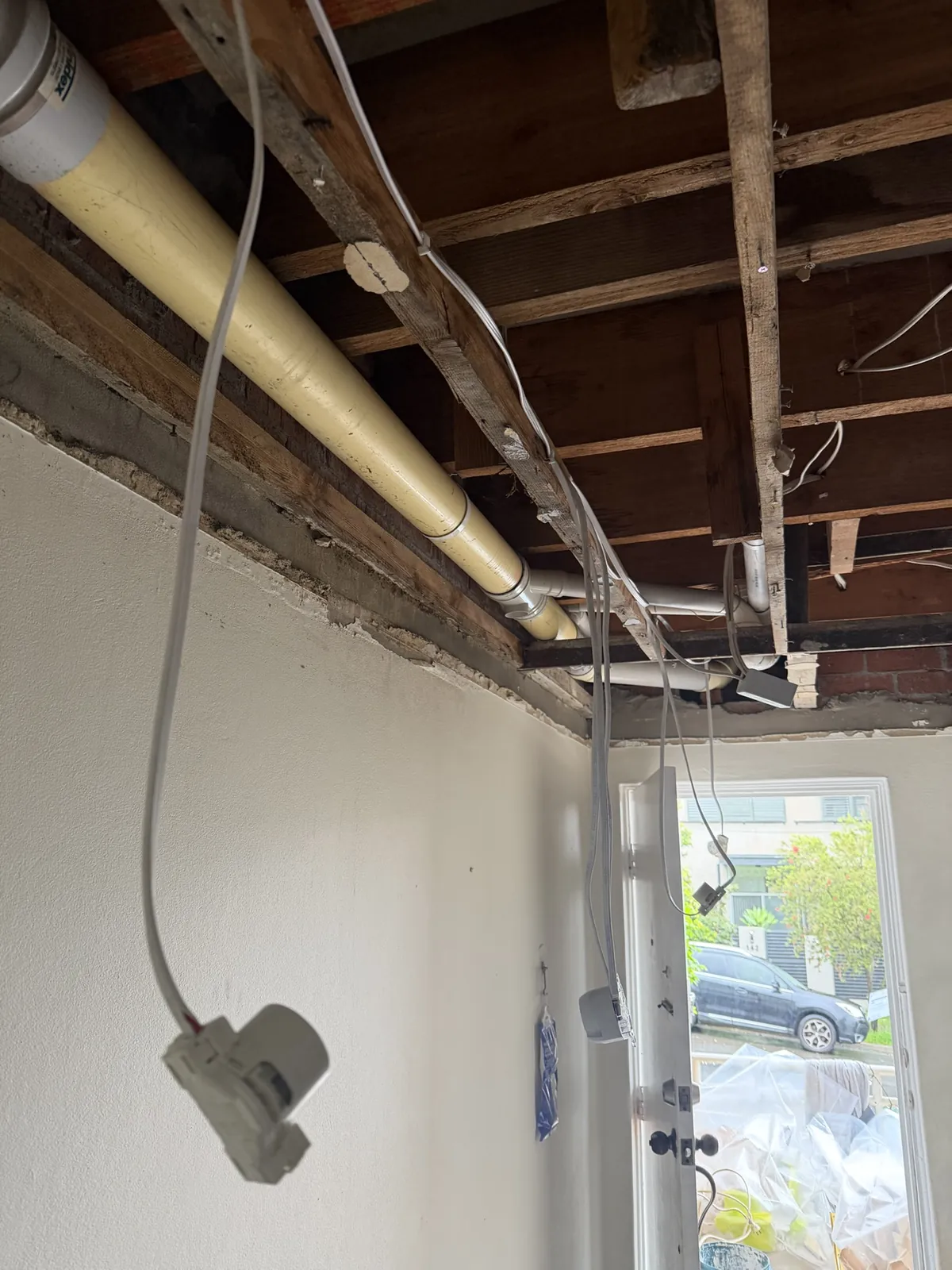
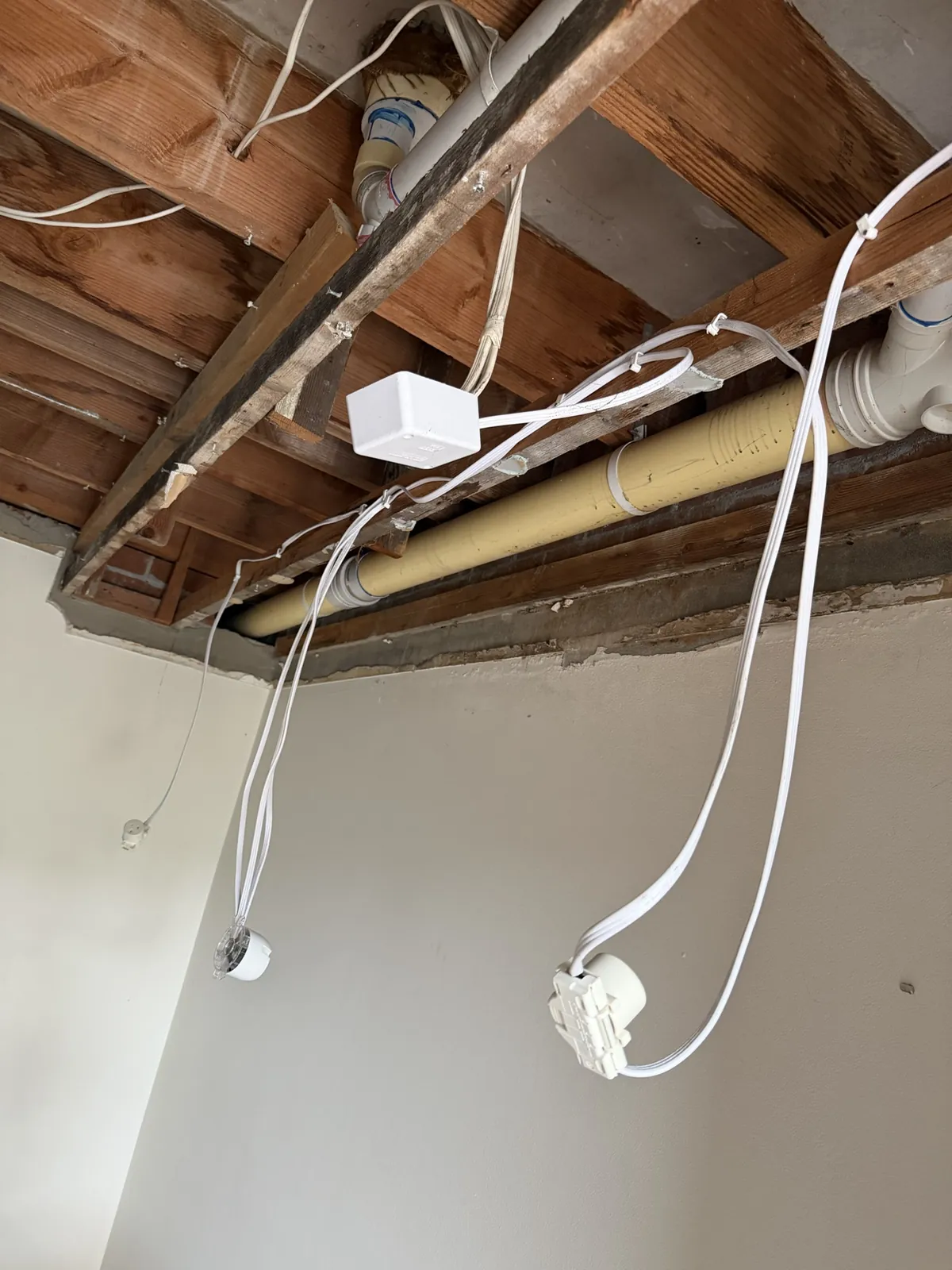
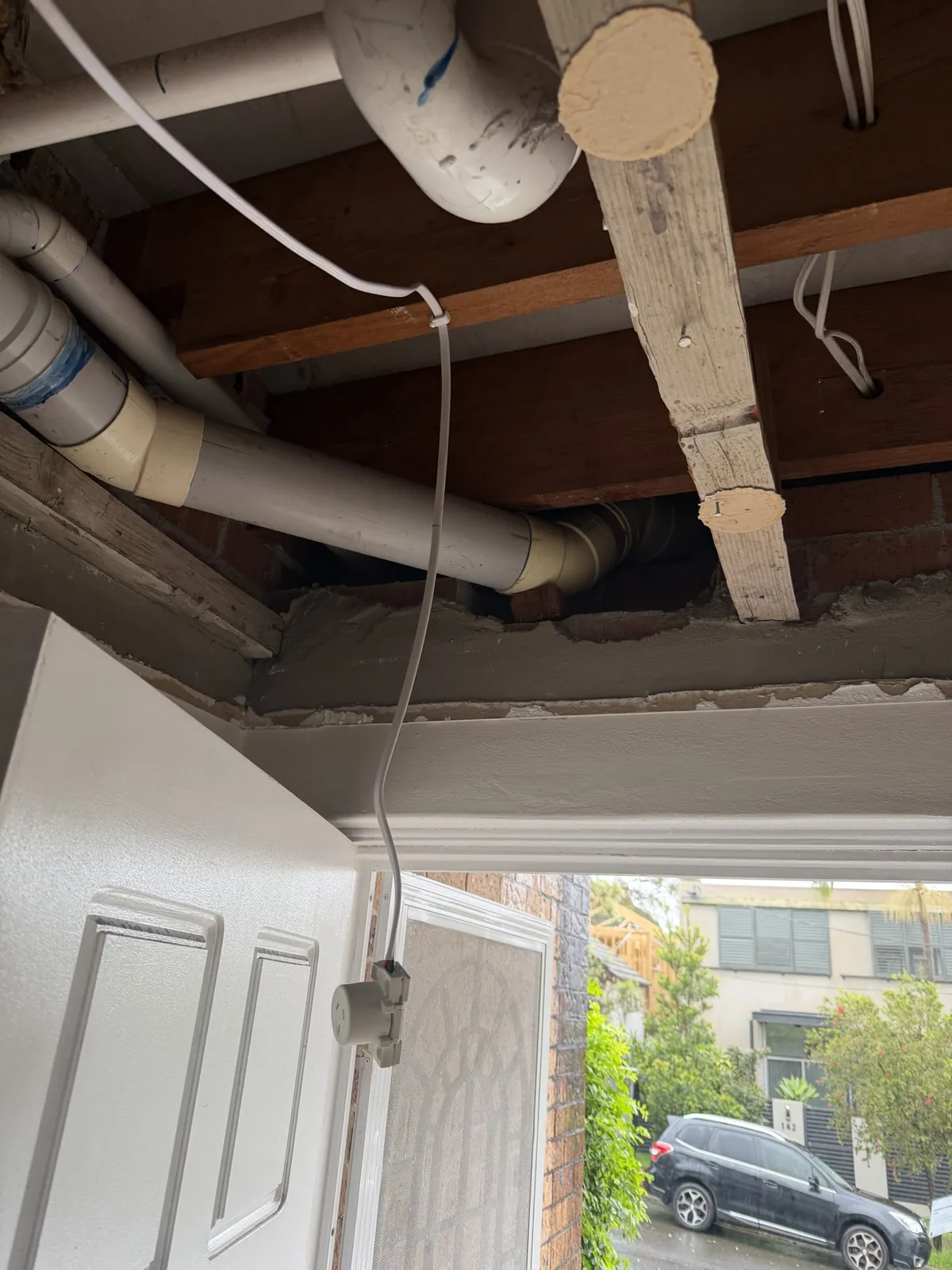
Under AS/NZS 3000, lights should be fed from a fixed circuit protected at the switchboard, with cables supported and connections made in proper enclosures. An extension board in the ceiling space isn't designed for that, and loose plug connections can work free or overheat where nobody can see them. New wiring work is tested and certified with a CCEW, as NSW requires.
If you're planning new lights or have found odd wiring in the ceiling, see our LED downlight installation page. We work right across Dulwich Hill and the Inner West.
Need help with something similar? Call 0421 772 661. For urgent faults, we also take 24/7 emergency call-outs.
No. Lighting should be wired as a fixed circuit from the switchboard. A power board in the ceiling space is an improvised setup that should be replaced.
Not always. On this job the ceiling was open, which made it easier to run and fix the new cables. Where the ceiling is in place, cables can often be run through the existing downlight holes and the roof space.
Sometimes. It depends on their condition and type. We check them when we look at the wiring.
Loose or improvised connections above a ceiling can work free or overheat where you can't see them. Proper wiring keeps them secure.
Send us a few details and we'll get back to you with a clear, upfront quote.